
"remove silver"
900 article(s) found

[coffee roasting] Fire throttle control of roaster (4) | Coffee workshop
Communication of professional baristas Please follow the coffee workshop (official Wechat account cafe_style) when dehydration goes through to the change of raw beans to yellow, indicating that a series of chemical reactions such as Maillard reaction, which are crucial to the production and transformation of coffee flavor substances, begin to take place actively. However, at this time, it is not said that the dehydration of raw beans stops, but the baking process begins to change by mainly removing the moisture of raw beans.
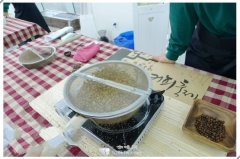
A complete knowledge of coffee roasting
Coffee roasting (coffee roasting) refers to the heating of raw beans to convert starch in raw beans into sugars and acids at high temperature, cellulose and other substances will be carbonized to varying degrees, water and carbon dioxide will be volatilized, proteins will be converted into enzymes and fats, and the remaining substances will be combined to form an oil film on the surface of coffee beans, and in the process coffee acids will be formed.

How much coffee can be produced by a tree a year? where can it be planted in China?
How much can a coffee tree produce in a year? where are the fruits planted in China? after harvesting, the skin and flesh of the fruit must be removed. The endocarp and silver peel are removed to form coffee beans. There are two kinds of methods: drying (natural drying, non-washing) and washing. Dry type, easy to operate, spread the harvested fruit on the dry ground, bask in the sun for a week or two, and you can hear the cluck when you turn it over.

Coffee honey treatment is the pectin of coffee beans. The process of coffee honey treatment should be turned over properly.
Professional coffee knowledge exchange more coffee bean information please follow the coffee workshop (Wechat official account cafe_style) Qianjie-honey treatment introduction 1. Skin / pulp: two coffee seeds are surrounded by the outermost pericarp. Except for sun-or all-natural sun-treated coffee, the outermost peel is disposed of within hours of harvest. As edible fruit, we

Drying and washing in the process of producing and processing coffee beans
Coffee beans have to go through the removal of skin, pulp, racing peel and silver skin before shipping to market. There are two kinds of methods: drying (also known as natural or non-washing) and washing. Drying: the method is relatively simple. First, spread the freshly harvested fruit on the sun field for a week or two until the fruit crackles. After natural drying, use a sheller to remove the dried pulp.

Coffee Roasting Details Mistakes Corrections Methods Description Roasting Experience
Once you smell a whiff of smoke floating around in the coffee beans, it must be a problem with your smoke exhaust system, or a problem with the timing of your smoke control. Silver skin is a flammable substance that is easy to burn, whether it is in the silver skin collector or in the drum, and coffee beans are easy to absorb smoke, so it should be in the silver skin when it expands and falls off.

How to distinguish sun-cured coffee from water-washed coffee beans from their appearance?
Professional coffee knowledge exchange more coffee bean information please follow the coffee workshop (Wechat official account cafe_style) 1. Natural Solar treatment (Natural Process) is the oldest way to treat raw coffee beans. (Photo Credit:Caff Malatesta) this is the oldest existing method of handling raw coffee beans. At the stage of manual fruit picking,

Three treatments of coffee beans differ in flavor, taste, variety characteristics, regional grinding scale.
The flavor of the three treatments of coffee beans differs from the taste of the varieties in the producing area. The honey treatment method is the same as the water washing method, which first uses a large sink to select ripe coffee fruits. The difference is that the honey treatment skips the step of coffee bean fermentation in the pool. The honey treatment first removes the peel of the ripe high-quality coffee fruit, uses a machine to remove the pulp and retains part of the pectin.

"LORING" intelligent coffee roaster-S70 PEREGRINE
The LORING intelligent coffee roaster solves two difficult problems that have not been solved in the traditional roaster: one is the control of the baking process, the other is the problem of smoke removal, so as to achieve smoke-free roasting. Its unique flavor lock roasting process (Flavor-Lock Roast Process) intelligent control patent technology is by far the most advanced coffee roasting technology in the coffee roasting process, which creates a

The process of processing and fermentation of Ethiopian coffee by washing
The process of fermentation by washing coffee in Ethiopia honey treatment is used in almost all the producing areas of Costa Rica. This method is also widely spread throughout Central America. Because the surface mucosa of coffee beans is extremely sticky and smooth and the sugar content is extremely high, it is often called honey. In the process of honey treatment, coffee will leave some or all of the honey when it is dried. Coffee fruits have been picked, graded and

Production method of Vietnamese Musk Coffee
Production method editing production method (4 pieces) roasting process of Luwak coffee beans: 1, civets love to eat ripe red coffee fruits on coffee trees; 2, pick out undigested coffee seeds from cat droppings; 3, remove the silver gray film of coffee seeds, wash them in the sun and dry them in the sun; 4, stir-fry Luwak coffee beans. Editor of production skills 1. Indonesia

Introduction of Italian espresso to the steps of roasting coffee beans
Technical level of boutique roasting coffee beans introduction to espresso 1. Picking is divided into mechanical picking and manual picking. Mechanical picking is suitable for coffee gardens with flat land and large areas of planting. Brazil is the most frequent user of mechanical picking coffee in the world. This method is characterized by low cost and high efficiency, but the coffee beans picked are uneven and of poor quality. For coffee with higher quality requirements

Coffee roaster: Korean roaster GENE CAFE hot air 3D coffee bean roaster 300g
Brand: Korean roaster color classification: red black roaster: 300g roaster Taiwan semi-direct roaster: coffee bean cooling plate: [product name]: Korean original GENE CAFE 3D professional coffee roaster [brand]: GENE CAFE [origin]: Korea [voltage]: 220V/60Hz [power]: 1200mm 1400W [size]: 383*243*229mm [temperature control

Coffee cultivation and initial processing of Ethiopian Coffee characteristic species manors in producing areas
Coffee cultivation and primary processing characteristics of Ethiopian coffee-producing areas manor sun treatment is very demanding on the climate, if you encounter a rainy day in the sun process, it will make the beans moist and moldy. When drying raw beans in the sun, the color is yellow, and the center will be brown after baking, rather than the white of washed beans. Sun-dried beans have relatively better sweetness and mellow thickness, and sour taste
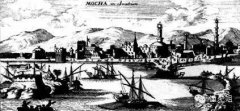
Barista's basic knowledge of Learning and training (2)
Professional barista communication Please pay attention to the coffee workshop (Wechat official account cafe_style) the basic knowledge is very important if you want to be an excellent barista. This article by Xi'an Aike Coffee training Institute is based on years of teaching, pick up baristas to learn and train the basics (1) Coffee beans are picked by hand for most coffee harvesting in the world, so pick coffee.

The whole process of planting and growth of coffee beans
Common questions about coffee bean cultivation: first, what are coffee kernels? How did you get the coffee seeds? Coffee seed, commonly known as coffee shell dried bean, is a kind of coffee seed without removing mesocarp and silver skin. Coffee seed is divided into Arabica Arabica seed and Robusta Robasta seed. The picture shows the commercial coffee raw bean available for consumption, and it is also the two major commercial plants on a large scale.
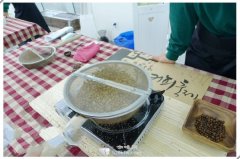
Complete knowledge of coffee roasting
Coffee roasting (coffee roasting) refers to the heating of raw beans to convert starch in raw beans into sugars and acids at high temperature, cellulose and other substances will be carbonized to varying degrees, water and carbon dioxide will be volatilized, proteins will be converted into enzymes and fats, and the remaining substances will be combined to form an oil film on the surface of coffee beans, and in the process coffee acids will be formed.

A complete collection of basic knowledge of learning and training for baristas
Professional barista communication Please pay attention to the coffee workshop (Wechat official account cafe_style) the basic knowledge is very important if you want to be an excellent barista. This article by Xi'an Aike Coffee training Institute is based on years of teaching, pick up baristas to learn and train the basics (1) Coffee beans are picked by hand for most coffee harvesting in the world, so pick coffee.

A brief introduction to the treatment method of grinding degree and baking degree of hard Sumatra Lindong boutique coffee beans
Sellers often mark Lintong Lindong and Mandheling Manning coffee as dry. In fact, the pulp and coffee seeds are often separated by a variety of mixing modes, and the more common is a backyard wet treatment. The smart farmer put the freshly picked coffee cherries into a simple peeling machine made of scrap metal, wood and bicycle parts. Then stick the peeled ones.
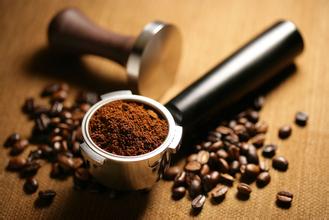
How to pick and handle coffee beans how to make good siphon coffee
The natural drying method sends the picked berries to the drying plant, which will be classified according to the degree of maturity, as the basis for the time and degree of exposure in the sun. Generally, overripe berries take only 1-3 days, red berries take 5-6 days, and green unripe berries take 1-2 weeks. After sun treatment, the dried fruit needs to go through the sheller to remove the peel, pulp and silver skin.